
News
The Constitutional Court of Georgia Rules not to Uphold the Constitutional Claim №1542
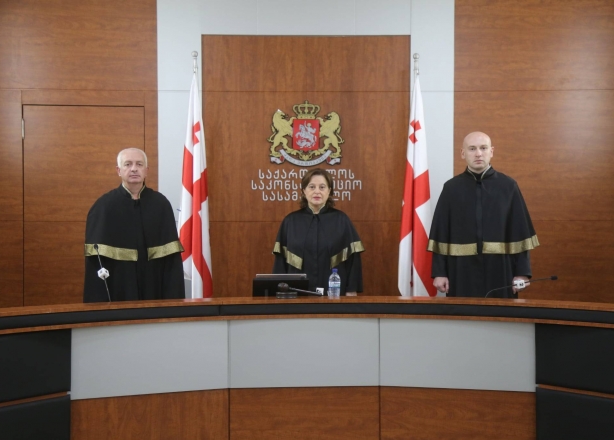
On November 14, 2025, the Second Board of the Constitutional Court of Georgia ruled not to uphold the Constitutional Claim №1542 (“The Public Defender of Georgia v. the Parliament of Georgia”).
The subject of the dispute was the constitutionality of Paragraph 2 of Article 247 of the Criminal Procedure Code of Georgia in respect with Paragraph 11 of Article 31 of the Constitution of Georgia. According to the disputed norm, the restriction considered under the Paragraph 1 of the Article 247 of the Criminal Procedure Code of Georgia, which implies the inadmissibility of using, against the will of the accused, the information provided by the accused during an interview prior to the hearing of the merits as an evidence does not apply to the information obtained as a result of an operative-investigative activity or a covert investigative action.
According to the explanation of the complainant, during an operative interview which is indeed voluntary, a person is not informed of one’s own rights, nor provided with information about the covert audio-video recording of the interview. The use of the evidence, obtained in this manner, against the will of the accused violates the constitutional right against self-incrimination.
According to the explanation of the respondent, the privilege against self-incrimination protects an individual from being compelled, through force or any form of coercion, to provide testimony against himself/herself, which does not occur when information is obtained from the addressee pursuant to the disputed rule, including through covert audio-video recording. Furthermore, according to the Respondent, the scope of protection of the right against self-incrimination does not include the possibility of retracting voluntarily given self-incriminating testimony.
In addition, the respondent noted that the disputed regulatory framework serves important legitimate aims and constitutes a proportionate means of achieving those aims. Although the existing normative framework under the disputed mechanism allows for the possibility of obtaining self-incriminating testimony from an individual, it also provides appropriate substantive and procedural safeguards necessary to ensure that the boundary between a justified limitation and a violation of the right against self-incrimination is properly maintained.
After interpreting the scope of protection of the right against self-incrimination and identifying the circumstances to be assessed in the case, the Constitutional Court of Georgia examined the issue of a possible interference with the right against self-incrimination by the disputed regulation. The Court explained that protection against the obligation to provide self-incriminating testimony implies a prohibition on the use of coercive methods or measures by the State. At the same time, the Court linked the element of coercion which is essential and determinative for establishing interference with the right against self-incrimination, on the one hand, to cases of physical and/or psychological coercion and, on the other hand, to instances of legal coercion. The Court noted that it is precisely in cases of physical, psychological and/or possible legal coercion, which suppress the will of the individual, that Paragraph 11 of Article 31 of the Constitution of Georgia may become applicable.
Since the rule established with the disputed norm implies the conscious and voluntary provision of the information by a person to a representative of the State during operative interview and at the same time, allows the addressee of the disputed measure to independently control the process of providing such information, the Constitutional Court did not establish interference with the scope of protection of the right against self-incrimination. In addition, the Court noted that the existence of error regarding the reasons and motives for participating in a voluntary interview, which may be present on the part of the addressee of the disputed measure, is irrelevant for the aims of Paragraph 11 of Article 31 of the Constitution of Georgia.
Based on the above, the Constitutional Court of Georgia reached a conclusion that the disputed norm does not contradict Paragraph 11 of Article 31 of the Constitution of Georgia.
A dissenting opinion of the Justice of the Constitutional Court Mr. Teimuraz Tughushi is attached to the judgment.
Subject of the Dispute: The constitutionality of Paragraph 2 of Article 247 of the Criminal Procedure Code of Georgia with respect to Paragraph 11 of Article 31 of the Constitution of Georgia.